
Description
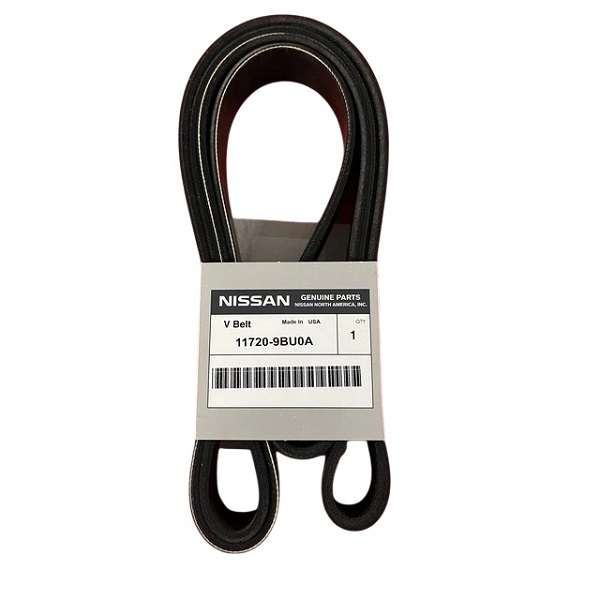
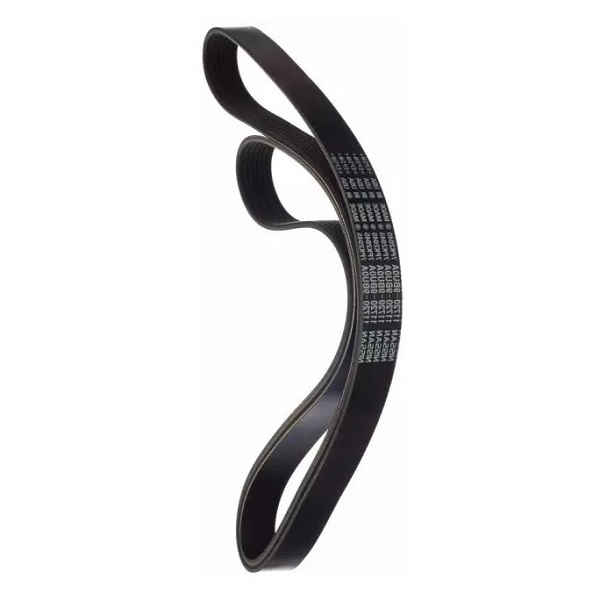
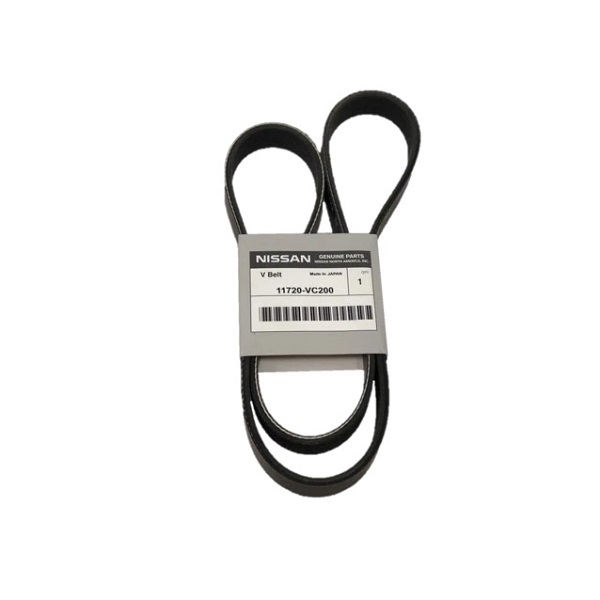
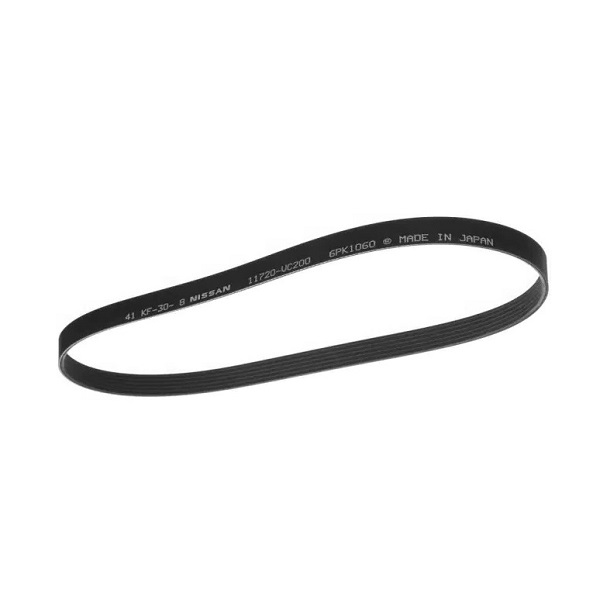
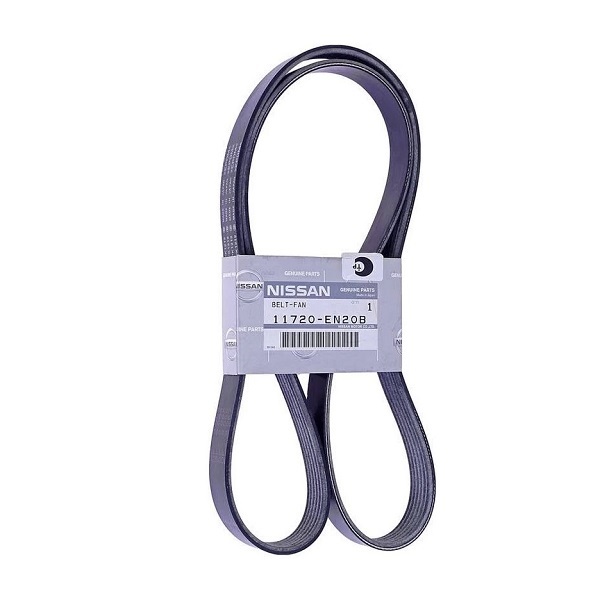
Genuine Nissan Serpentine Drive Belts
A genuine Nissan serpentine drive belt maintains continuous power transfer from the engine crankshaft to vital front-end accessory components—including the alternator, water pump, air conditioning compressor, and power steering pump—ensuring continuous electrical charging, engine cooling, and steering assist across all driving conditions in Kenya.
What Is a Genuine Nissan Serpentine Drive Belt?
 A serpentine drive belt (also known as an accessory drive belt, fan belt, or v-ribbed belt) is a durable, continuous rubber-compound belt featuring multiple longitudinal v-shaped ribs along its inner contact surface. Threaded around the crankshaft pulley, tensioner pulley, idler bearings, and accessory driven pulleys, it transfers rotational mechanical energy from the engine crankshaft to drive essential engine bay accessories. Modern Nissan belts are manufactured using Ethylene Propylene Diene Monomer (EPDM) synthetic rubber reinforced with high-tensile aramid/polyester cord tension members.
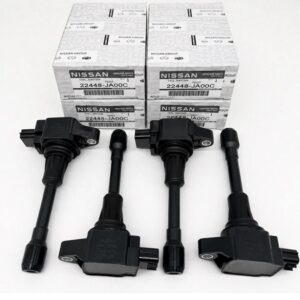
Also See: Genuine Nissan Ignition Coils
What Does a Genuine Nissan Serpentine Drive Belt Do?
The serpentine belt acts as the central mechanical power distributor for engine accessory systems.
Key functions of genuine Nissan serpentine drive belts include:
- Alternator Drive: Rotates the alternator rotor to power all onboard electronics, battery charging, and ECU modules.
- Water Pump Drive: Drives the engine coolant pump on applicable engine layouts to circulate coolant and prevent engine overheating.
- A/C Compressor Drive: Powers the air conditioning compressor to deliver cold cabin cooling in Nairobi traffic.
- Power Steering Pump Drive: Drives hydraulic power steering pumps on applicable models for smooth steering assistance.
- Multi-Rib Grip & Friction Transfer: Precision v-ribbed profiles maximize pulley surface contact, preventing slippage, high-pitch squealing, and power loss.
Common Nissan Vehicles in Kenya That We Service Serpentine Belts
Drive belt rib count (e.g., 4PK, 6PK, 7PK) and effective length (in millimeters, e.g., 6PK1210, 7PK1125) vary significantly depending on engine displacement, air conditioning options, and tensioner arrangement. Below is a compatibility overview:
| Nissan Model | Generation / Model Years | Engine Variants | Belt Specification & Fitment Notes |
| Nissan Note / March | E11 / E12 / K12 / K13 | HR12DE, HR15DE, CR12DE | Single 4PK or 6PK EPDM multi-rib belt layout. |
| Nissan Tiida / Latio / Wingroad | C11 / Y12 | HR15DE, MR18DE | Multi-rib accessory drive belt; verify stretch-fit vs. manual tensioner. |
| Nissan X-Trail | T30 / T31 / T32 | QR20DE, QR25DE, MR20DD | Heavy-duty 6PK drive belt powering alternator and A/C compressor. |
| Nissan Qashqai / Dualis | J10 / J11 | HR16DE, MR20DE, R9M (Diesel) | Multi-rib EPDM serpentine belt designed for automatic tensioners. |
| Nissan Serena | C24 / C25 / C26 / C27 | QR20DE, MR20DE, MR20DD | High-capacity drive belt for high alternator and dual A/C loads. |
| Nissan NV200 / AD Van | M20 / Y12 | HR16DE, CR12DE, HR15DE | Commercial-grade durable accessory belt. |
| Nissan Navara / NP300 | D40 / D23 | YD25DDTi, YS23DDT | Heavy-duty 7PK ribbed belt layout for high-load turbodiesels. |
| Nissan Patrol | Y61 / Y62 | ZD30DDTi, TB48DE, VK56VD | High-tensile multi-rib drive belt for heavy accessory loads. |
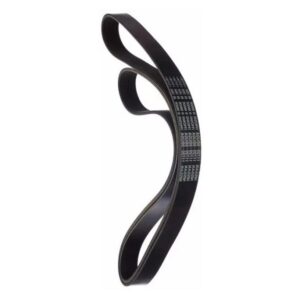 Note: Drive belt lengths differ between models with or without hydraulic power steering and electric water pumps. Always verify exact belt rib dimensions using your vehicle’s VIN or chassis number prior to purchasing.
Contact Doctor Carz Auto today via WhatsApp or call +254 715 803 098 to confirm fitment for your vehicle chassis code or to arrange local delivery/installation in Nairobi.
Signs Your Nissan Serpentine Belt Needs Replacement
A worn or loose serpentine belt causes accessory failure and can leave you stranded. Watch for the following warning indicators:
- Loud High-Pitched Squealing or Chirping Noise: High-pitched noise from the engine bay, especially during morning cold starts or when turning on the AC.
- Battery Warning Light / Dim Headlights: Slipping belt fails to spin the alternator at full RPM, triggering low battery charge warnings.
- Loss of Air Conditioning Cooling: AC system blows warm air because the belt is slipping on the compressor clutch pulley.
- Heavy or Stiff Steering: Sudden loss of hydraulic power steering assistance when making sharp turns.
- Visible Cracks, Fraying, or Rib Separation: Physical micro-cracks across rubber ribs, frayed fabric edges, or chunked rubber sections.
When Should a Nissan Serpentine Belt Be Replaced?
Modern EPDM serpentine belts do not crack as obviously as older neoprene belts, but their rubber ribs wear down like tire tread over time.
- Standard Replacement Interval: Replace serpentine belts every 60,000 km to 80,000 km or every 3 to 4 years.
- Immediate Replacement: Replace immediately if belt ribs wear thin, edges fray, or automatic tensioner reaches its maximum travel indicator stop.
- Routine Inspection: Check belt tension and rib depth during every second routine engine oil service.
How to Choose the Right Serpentine Belt for Your Nissan
Consider the following technical specifications when selecting replacement belts:
- Rib Count & Effective Length (PK Code): The “PK” number (e.g., 6PK1210 = 6 ribs, 1210mm length) must match factory specifications exactly to avoid slipping or snapping.
- EPDM Material Compound: Ensure pure EPDM synthetic construction for resistance to engine heat, oil splash, and atmospheric ozone cracking.
- Genuine OEM vs. Premium OES (Bando / Mitsuboshi): Genuine Nissan belts (often manufactured by Bando or Mitsuboshi) match exact OEM cord tension and pulley groove profiles.
How to Get the Best Performance and Longest Belt Life
- Inspect Automatic Belt Tensioner & Idler Pulleys: Always inspect the automatic tensioner assembly and idler pulley bearings when changing the belt. A worn or noisy pulley bearing will throw off new belt alignment and ruin it prematurely.
- Fix Engine Oil Leaks: Engine oil leaking from front crankshaft seals or valve cover gaskets degrades rubber belts quickly.
- Ensure Proper Pulley Alignment: Verify that all accessory pulleys are aligned in parallel to prevent edge wear.
Replacing and Installing Your Nissan Serpentine Belt
Serpentine belt installation requires correct routing and tension management:
- Note or sketch the exact belt routing diagram across all pulleys in your engine bay.
- Rotate the automatic belt tensioner hex nut or bolt using a long wrench to release tension.
- Slip the old serpentine belt off the pulleys and release the tensioner arm carefully.
- Inspect all accessory pulleys and spin idler bearings by hand to check for noise or play.
- Route the new genuine Nissan serpentine belt around all pulleys according to the factory routing diagram, leaving the smooth idler pulley for last.
- Rotate the tensioner arm again, slide the belt over the final pulley, release the tensioner, and verify that all belt ribs seat properly into pulley grooves.
- Start the engine and inspect belt alignment and operation.
For professional accessory belt and tensioner replacement, visit our specialized service garage in Kasarani, Nairobi.
 Why Choose Nissan Serpentine Belts from Doctor Carz Auto?
At Doctor Carz Auto in Kasarani, Nairobi, we stock genuine OEM and original Bando/Mitsubishi serpentine drive belts engineered for complete Nissan engine reliability. Our specialists cross-reference your chassis or VIN number to guarantee exact rib profile, belt length, and power transmission capability.
Need the Right Nissan Serpentine Drive Belt?
Contact Doctor Carz Auto today to verify fitment, check current pricing, or schedule professional belt installation.
- Call/WhatsApp: +254 715 803 098
- Email: nissan@doctorcarzauto.co.ke
- Location: Kasarani, Seasons Behind Jalyn Junior School, Nairobi, Kenya
- Website: https://doctorcarzauto.co.ke/
FAQs About Nissan Serpentine Drive Belts
- Q1: What does a genuine Nissan serpentine drive belt do?
A: It transfers rotational power from the engine crankshaft to drive essential accessories like the alternator, water pump, air conditioning compressor, and power steering pump. - Q2: What happens if my Nissan serpentine belt snaps while driving?
A: If the belt snaps, the alternator stops charging the battery, the water pump stops circulating coolant (causing engine overheating), power steering assist is lost, and the AC shuts off. - Q3: How often should I replace the drive belt on my Nissan in Kenya?
A: We recommend replacing the serpentine drive belt every 60,000 km to 80,000 km or whenever physical rib wear and cracking are detected. - Q4: Why is my serpentine belt squealing?
A: Belt squealing is caused by belt slippage over pulleys. Common causes include a worn/stretched belt, a weak automatic belt tensioner, oil/water contamination, or misaligned pulleys. - Q5: Should I replace the belt tensioner when changing the serpentine belt?
A: Yes, if the vehicle has high mileage (over 100,000 km). An old automatic tensioner with a weakened internal spring will cause a brand-new belt to slip and wear out prematurely. - Q6: How do I verify which serpentine belt fits my Nissan model?
A: Provide your vehicle chassis or VIN number to our Doctor Carz Auto technical team via WhatsApp (+254 715 803 098) for exact fitment verification.
Reviews
There are no reviews yet.